
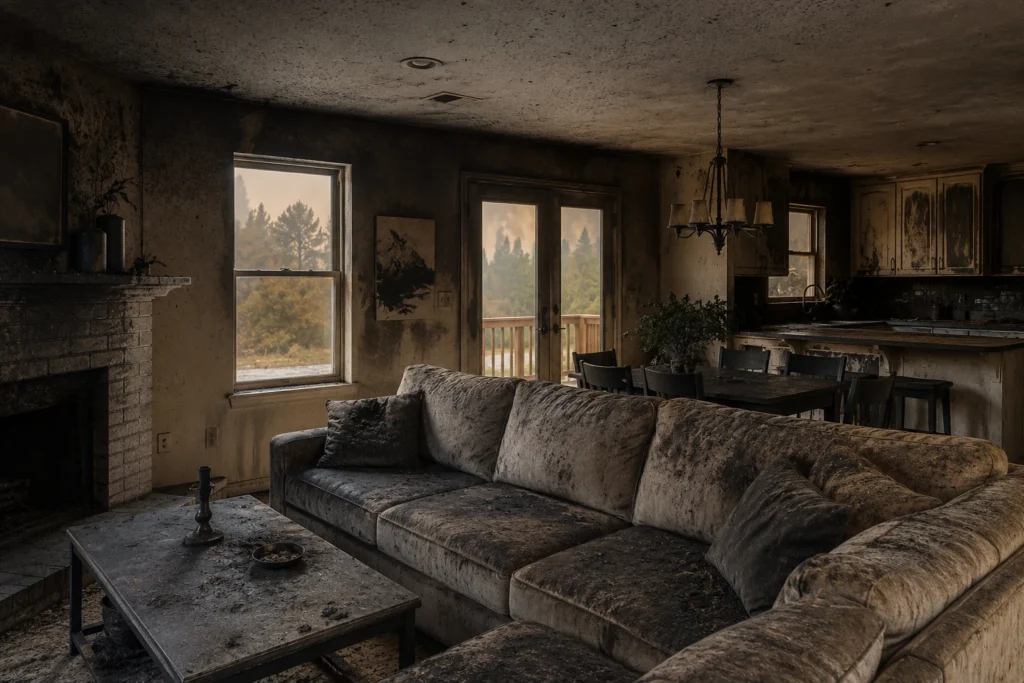
Wildfires don’t have to consume a home to leave behind serious property damage. In many cases, thick smoke travels dozens or even hundreds of miles from the source, carrying microscopic particles that settle inside homes, contaminate belongings, and create lingering odors that are difficult to remove. Understanding Wildfire Smoke Damage Claims is essential for homeowners who want to recover the full cost of restoring their property after a wildfire event. Even if your home in Euless never came close to the flames, smoke alone can trigger significant insurance losses that deserve careful attention.
Most homeowners immediately notice black residue on walls or the unmistakable smell of smoke. However, those visible signs are often only the beginning. Smoke particles can penetrate insulation, circulate through HVAC systems, settle inside electronics, and attach themselves to porous materials throughout the home. The longer contamination remains untreated, the greater the chance of permanent damage and more expensive repairs. Before deciding how to move forward, many homeowners research Public Adjuster Pros and Cons to better understand whether professional claim representation is appropriate. Every insurance claim is different, yet larger smoke losses often involve hidden contamination, multiple inspections, and extensive documentation that can make experienced guidance especially valuable.
Understanding Wildfire Smoke Damage
Smoke damage is often misunderstood because it isn’t always obvious. Unlike structural fire damage, which leaves visible destruction, smoke spreads silently through the air and settles in places most homeowners never think to inspect.
Wildfire smoke is made up of a complex mixture of:
- Fine ash
- Carbon particles
- Burned vegetation
- Chemical compounds
- Toxic gases
- Microscopic soot
These contaminants don’t simply disappear after the smoke clears. Instead, they settle onto virtually every exposed surface while also infiltrating hidden areas of the home. This is one reason Wildfire Smoke Damage Claims frequently become more complicated than homeowners initially expect.
How Smoke Travels
Smoke moves with wind currents and changing weather conditions. Depending on atmospheric conditions, smoke can travel remarkable distances before eventually settling.
That means homes located far from the actual wildfire may still experience:
- Indoor contamination
- Reduced air quality
- Lingering smoke odors
- Surface residue
- HVAC contamination
Distance alone doesn’t determine whether damage occurred. Professional inspection is often the only reliable way to evaluate the true extent of contamination.
How Smoke Gets Inside Your Home
Many homeowners assume that keeping doors and windows closed completely protects the interior. Unfortunately, smoke particles are much smaller than most people realize. They enter through tiny openings that normally go unnoticed.
Common entry points include:
- HVAC systems
- Roof vents
- Soffit vents
- Attic ventilation
- Chimneys
- Dryer vents
- Bathroom exhaust fans
- Window seals
- Door gaps
- Crawl spaces
- Electrical outlets
Once smoke enters the home, the heating and cooling system may circulate contaminated air through every room. Instead of remaining isolated to one area, the contamination often spreads throughout the entire property.
Types of Damage Caused by Wildfire Smoke
Smoke affects far more than painted walls. It can damage structural components, personal belongings, and mechanical systems while creating problems that continue developing long after the wildfire ends.
Visible Soot Damage
Soot is often the first sign homeowners notice. Depending on the materials burned during the wildfire, soot may appear black, gray, or even yellowish.
Commonly affected surfaces include:
- Walls
- Ceilings
- Doors
- Cabinets
- Countertops
- Flooring
- Window frames
- Furniture
Cleaning soot improperly can actually spread contamination and permanently damage delicate finishes. For that reason, professional cleaning methods are frequently recommended.
Hidden Smoke Contamination
The greatest concern often lies where homeowners cannot see. Smoke easily penetrates porous materials throughout the structure.
Examples include:
- Fiberglass insulation
- Drywall
- Carpeting
- Upholstered furniture
- Mattresses
- Curtains
- Clothing
- Paper records
- Books
- Artwork
Without thorough inspection, hidden contamination may remain inside the home for months. This hidden damage frequently becomes a major issue during Wildfire Smoke Damage Claims, especially when insurance inspections focus only on visible conditions.
Smoke Odors That Refuse to Go Away
Nearly everyone recognizes the smell of smoke. Unfortunately, odor molecules become deeply embedded inside porous building materials.
Smoke odors commonly remain inside:
- Wood framing
- Drywall
- Carpet padding
- Fabric furniture
- Clothing
- Insulation
Air fresheners may temporarily mask the smell. They rarely solve the actual problem.
Professional odor removal often involves specialized equipment such as:
- Hydroxyl generators
- Thermal fogging
- HEPA filtration
- Ozone treatment
- Negative air machines
The appropriate method depends on the type and severity of contamination.
Corrosion and Long-Term Damage
Smoke isn’t just dirty. It can also be chemically aggressive.
Acidic residues left behind after wildfire smoke exposure may gradually corrode:
- Electrical wiring
- Circuit boards
- Refrigerators
- Air conditioners
- Computer equipment
- Television components
- Smart home devices
Some electronics appear perfectly functional immediately after exposure. Weeks or months later, corrosion may begin causing intermittent failures or complete breakdowns.
Health Risks Associated With Wildfire Smoke
Property damage receives most of the attention. Health concerns deserve equal consideration. Wildfire smoke contains microscopic particulate matter that may remain suspended indoors long after outdoor conditions improve.
Extended exposure can contribute to:
- Eye irritation
- Persistent coughing
- Sore throat
- Headaches
- Sinus irritation
- Difficulty breathing
- Asthma flare-ups
Certain groups face greater risks, including:
- Children
- Older adults
- Pregnant women
- Individuals with asthma
- People with chronic lung disease
- Pets
Even when symptoms appear mild, contaminated indoor air should not be ignored. Improving indoor air quality often becomes an important part of the restoration process.
Does Homeowners Insurance Cover Smoke Damage?
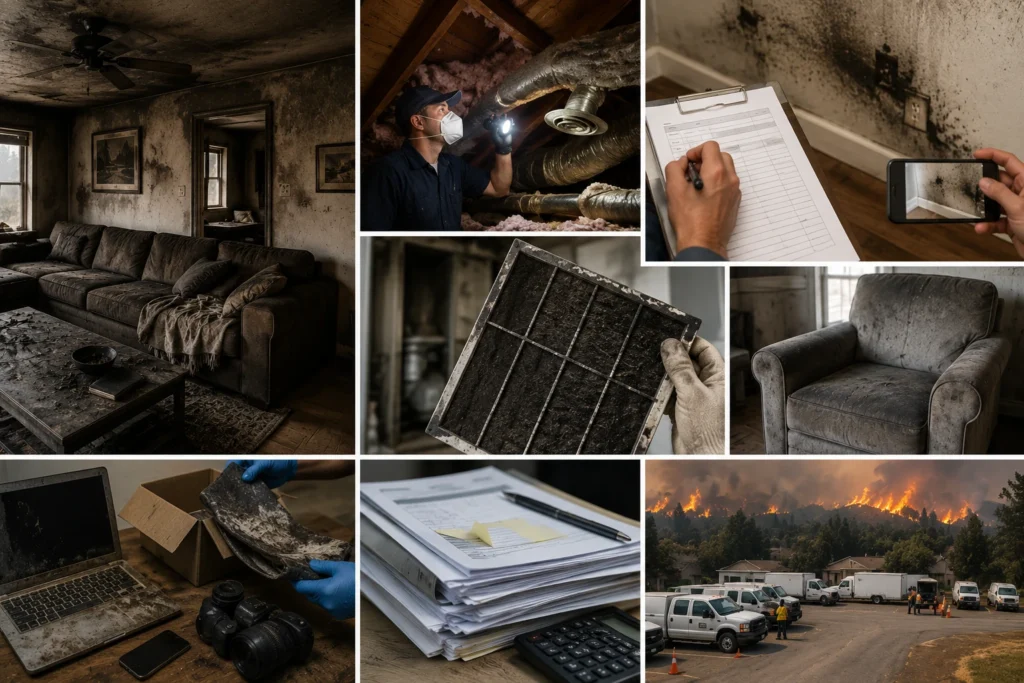
Many homeowners are relieved to learn that standard homeowners insurance policies frequently provide coverage for smoke damage resulting from a covered wildfire. Coverage often extends beyond simply cleaning visible soot. Depending on the policy, insurance may help pay for structural repairs, personal property restoration, temporary housing, and professional cleaning services. However, no two policies are identical.
Coverage depends on several factors, including:
- Policy language
- Coverage limits
- Deductibles
- Endorsements
- Exclusions
Understanding your specific policy is critical before making assumptions about what is or is not covered.
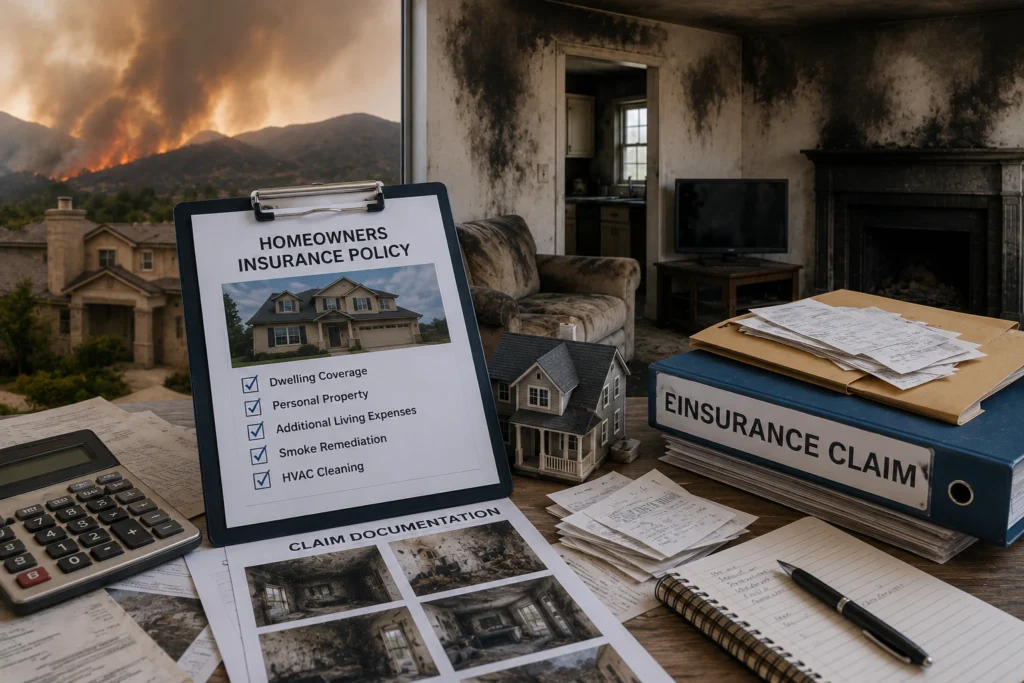
Common Types of Coverage
| Coverage | What It May Include |
| Dwelling Coverage | Cleaning, repairs, repainting, replacement of damaged materials |
| Personal Property | Furniture, clothing, electronics, appliances |
| Additional Living Expenses | Hotels, meals, temporary housing |
| Smoke Remediation | Professional cleaning and deodorization |
| HVAC Cleaning | Inspection and restoration of contaminated systems |
Although these coverages are common, insurance companies evaluate each claim individually. Documentation remains one of the strongest tools homeowners have throughout the process.
Steps to Take Immediately After Smoke Damage
The actions you take during the first several days can influence both the speed and value of your insurance claim. Rather than rushing into cleanup, begin by protecting yourself and preserving evidence.
Prioritize Safety
Before entering the home:
- Wait until authorities declare the area safe.
- Wear protective equipment if soot is present.
- Avoid disturbing contaminated materials unnecessarily.
Personal safety should always come first.
Document Everything
One of the biggest mistakes homeowners make is cleaning before documenting.
Instead:
- Photograph every room.
- Record videos from multiple angles.
- Capture soot deposits.
- Photograph HVAC vents.
- Document damaged belongings.
- Open cabinets and closets.
- Photograph attic spaces when safely accessible.
The goal is simple. Create a complete visual record before anything changes. Strong documentation supports stronger Wildfire Smoke Damage Claims later.
Prevent Additional Damage
Insurance policies generally require homeowners to take reasonable steps to reduce further losses.
Temporary protective measures may include:
- Covering broken windows
- Replacing contaminated HVAC filters
- Securing damaged roofing if necessary
- Preventing water intrusion after firefighting efforts
Keep every receipt associated with emergency work. Those expenses may become reimbursable under your policy.
Notify Your Insurance Company Promptly
Once immediate safety concerns have been addressed, report the loss to your insurance company.
When opening your claim:
- Provide accurate information.
- Avoid estimating repair costs too early.
- Explain both visible and suspected hidden damage.
- Request an inspection.
Clear communication helps establish a strong foundation for the remainder of the claims process.
Building Strong Wildfire Smoke Damage Claims
Insurance companies rely heavily on documentation. Homeowners should do the same. The strongest claims combine visual evidence with professional reports and organized records.
Helpful documentation includes:
- Independent inspections
- Air quality testing
- Contractor estimates
- Restoration company evaluations
- HVAC inspection reports
- Moisture readings when applicable
- Photographs
- Video walkthroughs
- Emergency repair invoices
The more evidence available, the easier it becomes to demonstrate the true scope of smoke contamination. Rather than relying on assumptions, objective documentation allows homeowners to present a well-supported claim that addresses both visible and hidden damage. Proper preparation not only improves communication with the insurance company but also helps ensure important losses are less likely to be overlooked during the evaluation process.
Creating a Complete Personal Property Inventory
Many homeowners focus primarily on repairing the structure after wildfire smoke exposure. While that is certainly important, personal belongings often represent a substantial portion of the insurance claim. Unfortunately, documenting these losses can become one of the most time-consuming parts of the entire process. Instead of trying to remember everything at once, work methodically through the home. Move from room to room and create a detailed inventory before items are discarded or professionally cleaned.
Consider including the following categories:
Living Room
- Sofas
- Recliners
- Coffee tables
- End tables
- Televisions
- Sound systems
- Lamps
- Area rugs
- Artwork
- Decorative accessories
Kitchen
- Refrigerators
- Microwaves
- Small appliances
- Cookware
- Dinnerware
- Glassware
- Food contaminated by smoke
- Coffee makers
- Air fryers
- Kitchen utensils
Bedrooms
- Mattresses
- Bed frames
- Dressers
- Clothing
- Shoes
- Jewelry
- Watches
- Laptops
- Tablets
- Personal electronics
Home Office
- Computers
- Monitors
- Printers
- Cameras
- Office furniture
- Important documents
- External hard drives
Garage
- Power tools
- Lawn equipment
- Sports equipment
- Storage shelving
- Automotive supplies
Whenever possible, include:
- Purchase dates
- Brand names
- Model numbers
- Estimated replacement costs
- Receipts
- Warranty information
- Photographs
Even if every detail cannot be remembered, reasonable estimates are usually far better than leaving items off the inventory altogether.
Save Every Additional Living Expense
Smoke damage sometimes makes a home temporarily uninhabitable while cleaning and restoration are completed. During that period, many homeowners incur expenses that may be reimbursable under their insurance policy.
Keep records for every extra cost, including:
- Hotel accommodations
- Short-term rentals
- Restaurant meals
- Laundry services
- Pet boarding
- Fuel expenses
- Storage unit rentals
- Moving costs
Create a digital folder containing scanned receipts, invoices, and credit card statements. Staying organized from the beginning often makes reimbursement much smoother later in the claims process.
Common Challenges During Wildfire Smoke Damage Claims
Smoke claims can quickly become complicated because much of the damage is hidden from view. Homeowners may assume that once visible soot is cleaned, the problem has been resolved. Unfortunately, that is not always the case. Some of the most common issues include:
Hidden Damage Is Easy to Miss
Smoke frequently settles behind walls, inside insulation, beneath flooring, and throughout HVAC ductwork. Without specialized inspections, contamination may remain undiscovered until odors return or indoor air quality declines.
Smoke Damage May Be Underestimated
Insurance inspections sometimes focus on surfaces that are easy to see while overlooking contamination inside mechanical systems, insulation, or personal belongings. Comprehensive documentation helps ensure that the full scope of damage receives proper consideration.
Cleaning Versus Replacement Disputes
One of the most common disagreements involves whether an item can be restored or should be replaced. Smoke may permanently affect porous materials, electronics, or upholstered furniture even when visible damage appears minor.
Delays in Claim Processing
Large wildfire events often generate thousands of insurance claims simultaneously. As a result, inspections, contractor availability, and settlement negotiations may take longer than expected. Remaining organized and responding promptly to requests for documentation can help minimize unnecessary delays.
Why Professional Smoke Testing Matters
Not every form of smoke contamination can be identified with a visual inspection alone. Professional environmental testing provides objective data that may strengthen your claim by identifying contamination levels throughout the property.
Testing services may include:
- Indoor air quality assessments
- Surface contamination sampling
- HVAC system testing
- Laboratory analysis
- Particle concentration measurements
Professional testing becomes especially valuable when homeowners experience lingering odors or health concerns despite initial cleaning efforts. Understanding scientific methods such as mass spectrometry helps explain how laboratories identify microscopic chemical compounds that remain after wildfire smoke exposure, providing additional evidence that may support insurance evaluations. Objective reports from qualified professionals often provide valuable support during Wildfire Smoke Damage Claims, particularly when hidden contamination becomes a point of disagreement.
The Role of Restoration Companies
Professional restoration companies perform much more than general cleaning. Their goal is to remove contamination while protecting the structural integrity of the property and preserving salvageable belongings whenever possible.
Common restoration services include:
- HEPA vacuuming
- Dry sponge cleaning
- Wet cleaning of hard surfaces
- Thermal fogging
- Hydroxyl treatment
- Ozone treatment
- HVAC duct cleaning
- Content pack-out services
- Textile cleaning
- Electronics restoration
Experienced restoration professionals also create detailed reports describing the extent of contamination and recommended repairs. These reports often become valuable supporting documentation during the insurance process.
Working With a Public Adjuster
Insurance adjusters working for the insurance company evaluate claims from the insurer’s perspective. A public adjuster, on the other hand, represents the policyholder.
Their responsibilities may include:
- Reviewing insurance policies
- Inspecting property damage
- Preparing detailed estimates
- Organizing documentation
- Coordinating with restoration professionals
- Negotiating settlement amounts
- Monitoring claim progress
For larger Wildfire Smoke Damage Claims, having experienced representation may help ensure that hidden losses receive careful attention and that documentation accurately reflects the true scope of damage.
Common Mistakes That Can Reduce Your Settlement
Even well-prepared homeowners sometimes make avoidable mistakes that weaken otherwise valid claims. Try to avoid the following:
Throwing Away Damaged Property Too Soon
Insurance companies often need to inspect damaged belongings before approving replacement. Disposing of items prematurely may eliminate important evidence.
Cleaning Before Documentation
Although cleaning may seem like the natural first step, it can unintentionally remove evidence of smoke contamination. Always photograph and document conditions before beginning cleanup.
Accepting the First Settlement Offer
Initial settlement offers may not always reflect the full extent of hidden damage. Carefully review estimates before agreeing to any payment.
Missing Filing Deadlines
Insurance policies establish deadlines for reporting losses and submitting documentation. Missing those deadlines can complicate or even jeopardize portions of the claim.
Forgetting Additional Living Expenses
Temporary housing, meals, laundry, transportation, and storage costs can represent a significant portion of covered losses. Save every receipt.
Typical Timeline of Wildfire Smoke Damage Claims
While every claim follows its own schedule, the process generally progresses through several common stages.
| Stage | What Happens |
| Initial Inspection | Damage is documented and photographed |
| Claim Submission | Evidence is provided to the insurance company |
| Insurance Investigation | Adjusters evaluate structural and personal property damage |
| Negotiation | Repair estimates and settlement amounts are discussed |
| Settlement | Payment is issued according to policy terms |
| Restoration | Cleaning, repairs, and rebuilding begin |
Complex claims involving widespread smoke contamination may require additional inspections before settlement is finalized.
Practical Tips to Maximize Your Insurance Recovery
The strongest insurance claims are built through preparation rather than luck.
These practical steps can improve both organization and communication throughout the process:
- Photograph every affected room before cleaning.
- Record video walkthroughs of the property.
- Keep copies of every inspection report.
- Save all receipts related to emergency expenses.
- Maintain written communication whenever possible.
- Request independent inspections if necessary.
- Organize claim documents in chronological order.
- Review contractor estimates carefully before approving repairs.
- Keep damaged property available for inspection until instructed otherwise.
Small organizational habits often make a significant difference when questions arise later.
Why Local Experience Matters
Every region presents unique restoration challenges, contractor availability, and insurance considerations. Homeowners in Euless often benefit from working with professionals who understand Texas insurance practices, local restoration resources, and the documentation typically needed to support complex property damage claims. Familiarity with regional conditions can also help streamline inspections and coordinate repairs more efficiently after widespread smoke events.
When Should You Contact a Public Adjuster?
Some insurance claims remain relatively straightforward. Others become increasingly complicated as additional damage is discovered.
Professional assistance may be worth considering when:
- Smoke contamination affects the entire home.
- Valuable personal property has been damaged.
- Air quality testing identifies hidden contamination.
- Settlement offers appear insufficient.
- Multiple inspections produce conflicting conclusions.
- The claim experiences repeated delays.
- Communication with the insurance company becomes difficult.
Large Wildfire Smoke Damage Claims frequently involve contractors, restoration companies, environmental consultants, engineers, and insurance representatives. Coordinating those moving pieces can become overwhelming without a clear strategy.
Final Thoughts
Wildfire smoke should never be dismissed simply because flames never reached the property. Microscopic particles can travel remarkable distances, settling inside walls, insulation, HVAC systems, furniture, electronics, and countless personal belongings. Left untreated, that contamination may continue affecting both the home and indoor air quality long after the wildfire itself has ended.
Building successful Wildfire Smoke Damage Claims requires prompt action, careful documentation, organized records, and a complete understanding of how smoke affects both visible and hidden areas of a home. By documenting every loss, preserving evidence, seeking qualified inspections, and understanding your insurance policy, homeowners place themselves in a far stronger position to pursue a fair settlement. If you’re facing smoke-related property damage in Euless, taking a proactive and well-documented approach today can make a meaningful difference in your financial recovery tomorrow.
FAQs
Wildfire smoke damage claims are insurance claims filed to recover the cost of cleaning, repairing, or replacing property damaged by smoke, soot, and ash from a wildfire.
Many homeowners insurance policies cover smoke damage caused by a covered wildfire, but coverage depends on your policy’s terms, limits, and exclusions.
Photographs, professional inspections, air quality testing, restoration reports, and documentation of smoke odors can help demonstrate the extent of the damage.
It’s best to document all damage first with photos and videos before cleaning, as premature cleanup may remove important evidence needed for your claim.
Yes. Smoke particles can circulate through the HVAC system, contaminating ductwork, filters, and components that may require professional cleaning or replacement.
You may be able to claim furniture, clothing, electronics, appliances, artwork, bedding, and other items affected by smoke or soot, depending on your policy.
The timeline varies based on the extent of the damage, the insurer’s investigation, and whether additional inspections or negotiations are required.
Professional testing can identify hidden contamination and provide objective evidence that strengthens your insurance claim and restoration plan.
You may want to consult a public adjuster if your claim involves extensive damage, hidden contamination, delayed processing, or a settlement offer that seems too low.