

Property damage rarely happens at a convenient moment. A sudden storm tears shingles off the roof. A pipe bursts in the middle of the night. Fire or water damage turns a normal day into a complicated insurance situation. When the claim process begins, many homeowners quickly realize how confusing it can be. Policies are filled with dense language, inspections take time, and settlement amounts do not always match the real repair costs.
That is where learning how to find a public adjuster becomes important. The right professional can help homeowners understand the claims process, document damage properly, and negotiate with the insurance company on their behalf. But finding the right adjuster requires careful research. Not every adjuster works the same way, and the difference between a qualified professional and an unreliable one can affect the outcome of your claim.
In this guide, we will walk through how to find a public adjuster step by step. From verifying licenses to reviewing contracts, these strategies can help homeowners choose someone who genuinely protects their interests during the claims process.
What a Public Adjuster Actually Does
Many homeowners hear the term “adjuster” but are not always sure what it means. Insurance claims often involve multiple professionals, and each one serves a different role.
Here is a quick comparison.
| Type of Adjuster | Who They Work For | Primary Role |
| Insurance Company Adjuster | Insurance company | Evaluates damage for the insurer |
| Independent Adjuster | Insurance company (contracted) | Handles claims for insurers during busy periods |
| Public Adjuster | Policyholder | Represents the homeowner during the claim |
A public adjuster works directly for the property owner, not the insurance company. Their job is to evaluate damage, review the insurance policy, prepare claim documentation, and negotiate with the insurer.
Their responsibilities typically include:
- Inspecting property damage in detail
- Estimating repair costs
- Reviewing policy coverage
- Preparing claim documentation
- Communicating with insurance representatives
- Negotiating settlement amounts
Understanding these responsibilities is the first step in learning how to find a public adjuster who is truly working on your side.
Situations Where Hiring a Public Adjuster Makes Sense
Not every claim requires outside help. Minor claims are sometimes resolved quickly through direct communication with the insurance company. However, there are many situations where professional assistance becomes extremely valuable.
Common scenarios include:
- Major storm damage
- Fire or smoke damage
- Flood or water damage
- Structural damage affecting multiple areas of the home
- Disputes over claim payouts
- Claims that have been delayed or denied
Large claims often involve complex estimates, multiple contractors, and detailed documentation. This is where understanding how to find a public adjuster can make the difference between a stressful claim and a well-managed one.
Start With Licensed Professionals
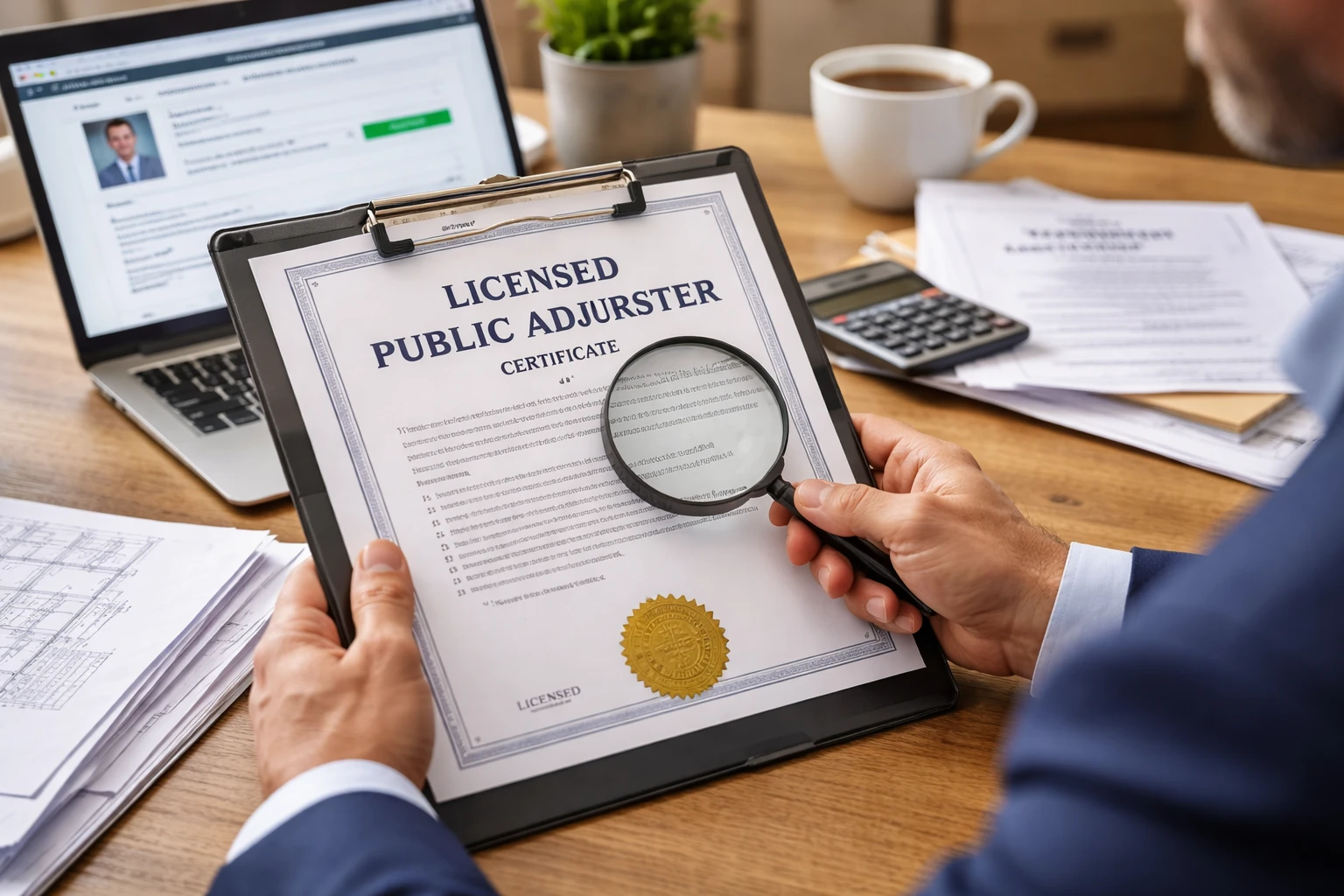
The first step when researching how to find a public adjuster is verifying licensing. Public adjusters are regulated in many states and must meet specific requirements before offering their services.
Licensing requirements typically include:
- Professional training
- Passing state examinations
- Background checks
- Continuing education requirements
These regulations exist to protect homeowners from unqualified or dishonest individuals.
To verify a license, homeowners can:
- Check their state insurance department website
- Search the adjuster’s license number
- Confirm their license status is active
Working with a licensed professional ensures the adjuster is accountable to state regulations and professional standards.
Why Local Experience Matters
Location plays a larger role in insurance claims than many homeowners realize. Weather patterns, building codes, and repair costs can vary significantly from one region to another.
When researching how to find a public adjuster, prioritize professionals who understand local property damage trends and repair markets.
For example, experienced adjusters in Texas often deal with:
- Hail damage
- Wind damage
- Severe thunderstorms
- Roofing claims
- Water intrusion from storms
Local professionals may also have working relationships with contractors, engineers, and inspectors who understand regional building practices.
These connections often help claims move forward more efficiently.
Check Reputation Before Making a Decision
Reputation is one of the strongest indicators of reliability. Before hiring anyone, homeowners should research their track record carefully.
Good sources for research include:
- Online review platforms
- Professional directories
- Local business listings
- Referrals from contractors or attorneys
Look for patterns rather than individual reviews. A strong reputation usually includes consistent feedback about communication, professionalism, and claim results.
Here are a few positive signs:
- Clear communication with clients
- Detailed explanations of the claims process
- Transparent fee structures
- Responsive follow-up during claims
Understanding reputation is a key part of how to find a public adjuster who will handle your claim responsibly.
Ask the Right Questions During Your First Conversation
Hiring a public adjuster is a professional decision. Homeowners should treat the initial consultation like an interview.
Here are some useful questions to ask.
| Question | Why It Matters |
| How long have you worked as a public adjuster? | Experience often improves claim management |
| What types of claims do you handle most often? | Some adjusters specialize in certain damages |
| How will you communicate updates? | Clear communication prevents confusion |
| What documentation will you prepare? | Professional documentation strengthens claims |
| How long does the process usually take? | Helps set realistic expectations |
These questions help homeowners understand the adjuster’s working style and expertise.
Learning how to find a public adjuster often comes down to identifying professionals who communicate clearly and answer questions directly.
Understand How Public Adjusters Are Paid
One of the most common questions homeowners ask involves cost. Fortunately, the payment structure for public adjusters is relatively straightforward.
Most work on a contingency basis.
This means they receive a percentage of the claim settlement rather than charging upfront fees.
Typical fee structures look like this:
| Settlement Amount | Adjuster Fee Example |
| $20,000 claim | 10% – 15% fee |
| $50,000 claim | 8% – 12% fee |
| $100,000+ claim | Negotiable percentage |
Because the adjuster’s compensation depends on the claim outcome, their incentives align with the homeowner’s goal of reaching a fair settlement.
When researching how to find a public adjuster, always review the fee agreement carefully before signing.
Review the Contract Carefully
A professional adjuster will provide a written agreement outlining their services. This contract explains what they will do and how they will be paid.
Important elements to review include:
- Fee percentage
- Scope of services
- Contract cancellation rights
- Communication expectations
- Claim representation terms
Homeowners should read the entire document carefully and ask questions about anything unclear.
Contracts should never feel rushed or pressured. Taking time to review them is a crucial part of how to find a public adjuster who operates transparently.
Warning Signs to Watch For
Unfortunately, the property damage industry sometimes attracts individuals who use aggressive tactics to secure clients. Recognizing warning signs can protect homeowners from costly mistakes.
Red flags include:
- Asking for large upfront payments
- Guaranteeing a specific settlement amount
- Showing up unsolicited immediately after storms
- Refusing to provide license information
- Avoiding written contracts
Professional adjusters rely on reputation and experience rather than pressure.
When evaluating how to find a public adjuster, trust your instincts. If something feels rushed or unclear, continue researching other professionals.
How Public Adjusters Strengthen Insurance Claims
Insurance claims rely heavily on documentation. Photos, estimates, inspection reports, and policy interpretation all influence the final settlement.
Public adjusters bring organization and expertise to this process.
Their work often includes:
- Detailed property inspections
- Comprehensive repair estimates
- Policy analysis
- Damage documentation
- Negotiation with insurance representatives
These steps help ensure that damage is fully recognized and accurately documented during the claim.
According to research on insurance claims processes, proper documentation plays a major role in settlement outcomes. The insurance industry itself relies on detailed claim evaluation procedures.
Understanding these procedures helps explain why many homeowners seek professional assistance when claims become complicated.
What Happens After Hiring a Public Adjuster

Once an adjuster is hired, the claims process usually follows several structured steps.
Step 1: Initial Consultation
The adjuster reviews the damage and discusses the insurance policy with the homeowner.
Step 2: Property Inspection
A detailed inspection identifies visible and hidden damage throughout the property.
Step 3: Claim Preparation
Documentation, photos, and cost estimates are assembled into a comprehensive claim package.
Step 4: Claim Submission
The adjuster presents documentation to the insurance company.
Step 5: Negotiation
Both sides review the claim details and discuss settlement terms.
Step 6: Settlement Agreement
Once both parties agree on the claim amount, payment is issued.
Understanding this process helps homeowners feel more confident when learning how to find a public adjuster who can manage each stage effectively.
Key Benefits of Working With a Public Adjuster
Insurance claims can become overwhelming quickly. Hiring a professional offers several advantages.
Some of the most valuable benefits include:
- Reduced stress during the claims process
- Professional claim documentation
- Organized communication with insurers
- Clear understanding of policy coverage
- Improved claim negotiation support
Homeowners still remain involved in decisions, but the adjuster manages much of the technical work required to move the claim forward.
Final Thoughts on Finding the Right Public Adjuster
Insurance claims represent an important financial moment for homeowners. Repairing damage, restoring a property, and moving forward all depend on reaching a fair settlement.
That is why understanding how to find a public adjuster is so valuable.
Start with licensed professionals. Research their reputation carefully. Ask questions during consultations. Review contracts thoroughly before signing. And always prioritize transparency and experience.
When homeowners take the time to research how to find a public adjuster, they are far more likely to choose someone who understands the claims process and represents their interests effectively.
Property damage may arrive unexpectedly, but the response does not have to feel chaotic. With the right professional guidance, homeowners can navigate the insurance process with clarity, confidence, and a stronger chance of achieving the settlement they deserve.
FAQs
A public adjuster is a licensed professional who represents homeowners during insurance claims and helps negotiate settlements with insurance companies.
Homeowners often hire one when claims are large, complex, delayed, or disputed and they need help documenting damage and negotiating with the insurer.
You can verify licensing through your state’s department of insurance website, which typically provides searchable databases of active adjuster licenses.
Most public adjusters work on a contingency fee basis, meaning they receive a percentage of the claim settlement rather than charging upfront fees.
It’s best to start researching how to find a public adjuster soon after property damage occurs, especially before the insurance claim process becomes complicated.
No reputable public adjuster should guarantee a specific settlement amount, but their expertise may help ensure damage is properly documented and evaluated.
Homeowners should ask about experience, licensing, fee structure, claim process, communication methods, and the types of claims the adjuster typically handles.
The timeline varies depending on the complexity of the claim, but many claims take several weeks to several months to resolve.
Yes. Insurance company adjusters represent the insurer, while public adjusters represent the policyholder during the claims process.
Red flags include asking for upfront payments, refusing to provide license information, pressuring homeowners to sign quickly, or promising guaranteed settlements.