
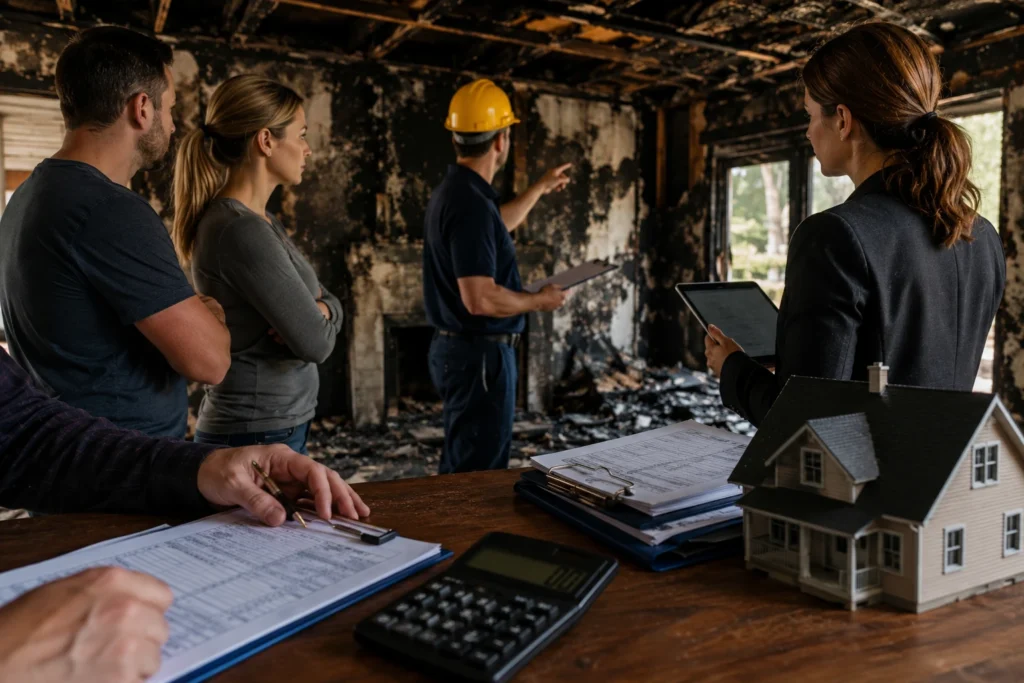
A house fire can turn an ordinary day into one of the most stressful experiences a homeowner will ever face. Beyond the emotional toll of seeing a home or business damaged, there is the overwhelming task of rebuilding and dealing with an insurance claim. Unfortunately, many property owners learn How Insurance Companies Undervalue Fire Claims only after receiving a settlement offer that falls far below the true cost of recovery. If you own property in Euless, understanding how insurers evaluate losses can help you protect your financial interests before agreeing to any settlement.
Most people purchase insurance with the expectation that it will provide financial security after a disaster. While insurance policies are designed to cover covered losses, the claims process itself is rarely simple. Fire damage extends well beyond what the eye can see. Smoke travels throughout a structure, heat weakens building materials, and water used to extinguish the flames often creates additional damage that may not become visible for days or weeks. When these issues are overlooked or underestimated, the final settlement may not fully reflect what it will actually cost to restore the property.
The good news is that homeowners are not powerless. By understanding how fire claims are evaluated, recognizing common valuation mistakes, and documenting losses carefully, you can significantly improve your chances of receiving a fair settlement. This guide explains why fire claims are frequently undervalued, how the claims process works, and what practical steps you can take to protect yourself throughout the recovery process.
Understanding How Fire Insurance Claims Work
Every fire insurance claim follows a series of steps. Although the details vary depending on the size of the loss and the insurance policy, the overall process is generally consistent.
After the fire department declares the property safe to enter, homeowners typically notify their insurance company to begin the claims process. The insurer assigns an adjuster who schedules an inspection, reviews the visible damage, and begins preparing an estimate.
Depending on the severity of the fire, the insurance company may also authorize emergency services such as:
- Boarding up broken windows
- Installing temporary roof coverings
- Water extraction
- Structural stabilization
- Smoke mitigation
- Temporary housing assistance
These emergency measures are intended to prevent additional damage while the claim is being investigated.
A typical fire insurance claim includes the following stages:
| Claim Stage | Purpose |
| Initial claim report | Opens the insurance claim |
| Emergency mitigation | Prevents further damage |
| Property inspection | Documents visible losses |
| Estimate preparation | Calculates repair costs |
| Policy review | Determines available coverage |
| Negotiation | Resolves disagreements over value |
| Settlement | Issues payment based on covered losses |
Each stage influences the next. If important damage is missed during the inspection, it may never appear in the repair estimate unless additional documentation is provided later.
Why Insurance Companies Often Undervalue Fire Claims
Insurance companies exist to pay legitimate claims, but they are also businesses responsible for managing costs. Every claim paid affects the company’s financial performance, making accurate claim evaluation important for both the insurer and the policyholder.
Problems often arise because fire losses are extremely complex. Unlike a broken window or a damaged fence, fire affects nearly every part of a building simultaneously. Flames may destroy one room while smoke contaminates the entire house. Heat can weaken framing without leaving visible burn marks, and thousands of gallons of water used during firefighting may soak insulation, flooring, and structural components. Estimating this type of damage requires careful investigation. If inspections are rushed or limited to what is immediately visible, portions of the loss may never be included in the estimate.
Another factor involves standardized estimating software. Many insurers rely on pricing databases to calculate repair costs. While these systems provide consistency, they may not always reflect current local labor rates, specialized restoration procedures, or regional material pricing. Even relatively small differences in pricing can add thousands of dollars to the total repair estimate.
Early Settlement Offers
Many homeowners receive settlement offers shortly after the initial inspection. At first glance, this may seem helpful. After all, families often need immediate funds for temporary housing, clothing, food, transportation, and emergency repairs. However, accepting an early settlement before the full extent of the damage is understood can become a costly mistake.
Hidden smoke contamination, compromised electrical systems, structural weakening, mold growth, and additional demolition requirements frequently emerge during reconstruction. If these damages were not included in the original estimate, homeowners may find themselves paying unexpected costs later. For this reason, it is generally wise to review every estimate carefully before accepting a final settlement.
Common Ways Insurance Companies Undervalue Fire Claims
Fire claims become undervalued in many different ways. Some issues result from incomplete inspections, while others stem from inaccurate pricing, missing documentation, or overlooked categories of damage. Understanding these common problems helps homeowners identify potential issues before they affect the final settlement.
Incomplete Property Inspections
A fire inspection should involve much more than looking at burned walls or blackened ceilings. Smoke spreads throughout a structure. Heat affects materials differently depending on exposure. Water often travels well beyond the area where firefighters extinguished the flames. Despite this, some inspections focus primarily on obvious damage while overlooking hidden areas where significant problems exist.
Frequently overlooked locations include:
- Attic insulation
- HVAC ductwork
- Crawl spaces
- Interior wall cavities
- Electrical wiring
- Roof framing
- Ventilation systems
- Basement storage areas
Professional restoration contractors often identify damage in these areas after demolition begins, resulting in supplemental repair estimates that were not included initially.
Using Low Repair Estimates
Repair estimates depend heavily on accurate pricing. Insurance adjusters commonly use estimating software that assigns labor rates and material costs based on standardized databases. While these systems provide consistency, they cannot always account for real-world market conditions. Construction costs fluctuate. Material shortages occur. Labor availability changes. Permits, debris removal, specialized cleaning, and regional pricing differences all influence the actual cost of rebuilding.
For example, replacing smoke-damaged custom cabinetry is significantly different from installing stock cabinets purchased from a home improvement store. Likewise, restoring historic trim, hardwood flooring, or specialty finishes often requires skilled craftsmanship that exceeds standard pricing assumptions. If repair estimates rely on outdated or generalized pricing, homeowners may receive settlements that fall well below actual reconstruction costs.
Depreciating Personal Property Too Aggressively
Personal belongings frequently represent one of the largest portions of a fire insurance claim. Furniture. Televisions. Computers. Appliances. Clothing. Jewelry. Kitchen equipment. Power tools. Office furniture. Insurance companies often calculate the value of personal property using depreciation when policies provide Actual Cash Value coverage. While depreciation is a standard insurance practice, disagreements frequently arise over how much value has actually been lost due to age and wear.
A five-year-old television, for example, may have depreciated substantially on paper, but replacing it with a comparable modern model may cost considerably more than the amount offered. These differences become even more significant when hundreds of personal belongings must be replaced at today’s retail prices. Carefully documenting each item with photographs, receipts, warranty information, credit card statements, or family photographs can substantially improve the accuracy of a personal property claim.
Ignoring Smoke and Soot Damage
Many people naturally focus on the areas where flames caused the most destruction. However, smoke and soot often create far more widespread damage than the fire itself. Even if only one room burned, smoke can circulate through the entire structure within minutes, settling on walls, ceilings, furniture, clothing, electronics, and inside the HVAC system.
Smoke residue is more than a cosmetic issue. It contains acidic particles that can stain surfaces, corrode metals, damage electronics, and produce lingering odors that are difficult to eliminate without professional restoration. If these contaminants are not properly removed, homeowners may continue experiencing unpleasant smells and long-term damage even after repairs appear complete.
Professional smoke remediation often includes:
- Air scrubbing
- Thermal fogging
- Specialized surface cleaning
- HVAC inspection and cleaning
- Ozone or hydroxyl treatments
- Sealing affected materials when necessary
If these services are omitted from the insurance estimate, the true cost of restoring the home may be significantly underestimated.
Overlooking Hidden Structural Damage
Fire affects building materials in ways that are not always immediately visible. Wood framing may lose structural strength after prolonged exposure to high temperatures. Steel beams can warp. Concrete may develop internal cracks. Roof trusses may no longer meet engineering standards despite appearing intact from the ground.
Because much of this damage is concealed behind drywall or insulation, it may not be identified until demolition begins. In larger losses, structural engineers are often brought in to evaluate whether framing, roof systems, or load-bearing components remain safe. When these evaluations are skipped, repair estimates may include cosmetic work while overlooking structural issues that are critical to the long-term safety of the building.
Excluding Building Code Upgrades
Many homes were built under older building codes that have since changed. When major reconstruction takes place, local regulations may require portions of the home to be rebuilt according to current standards. These upgrades can add considerable expense to the restoration project.
Examples include:
- Electrical system improvements
- Updated plumbing requirements
- Additional insulation
- Fire-resistant construction materials
- Improved ventilation
- Energy-efficiency standards
Some insurance policies include Ordinance or Law Coverage, which helps pay for these required upgrades. If this coverage applies but is not included in the estimate, homeowners could unexpectedly face thousands of dollars in additional costs. Understanding whether your policy provides this protection is an important part of reviewing any settlement offer.
Why Fire Damage Is More Extensive Than It Appears
One of the biggest misconceptions about fire losses is that the visible damage tells the whole story. In reality, fire creates several different types of damage at the same time. Flames are only one part of the problem. Smoke, heat, water, and corrosive residue often affect areas that never actually burned.
Smoke Travels Far Beyond the Fire
Smoke naturally follows air currents. It moves through doorways, vents, attic spaces, wall cavities, and ductwork, carrying microscopic particles throughout the structure. As smoke cools, these particles settle on nearly every surface they contact.
That includes:
- Clothing
- Upholstery
- Children’s toys
- Kitchen cabinets
- Window treatments
- Bedding
- Books
- Electronics
- Family photographs
Cleaning these items often requires specialized restoration techniques rather than ordinary household cleaning products.
Heat Weakens Building Materials
High temperatures can damage structural materials long before flames actually reach them. Wood begins losing strength. Metal expands and contracts. Glass becomes more susceptible to cracking. Drywall loses structural integrity. Adhesives and fasteners can fail under prolonged heat exposure. Because these changes are not always visible, additional inspections may be necessary before reconstruction begins.
Water Damage Creates Secondary Problems
Thousands of gallons of water may be used to extinguish a significant residential fire. While necessary to save the structure, this water frequently creates another restoration challenge.
Moisture can penetrate:
- Hardwood flooring
- Carpet padding
- Drywall
- Insulation
- Ceiling cavities
- Framing lumber
- Cabinets
Without prompt drying, these materials may deteriorate further or support mold growth.
Mold Can Develop Quickly
Moisture left behind after firefighting efforts creates favorable conditions for mold growth. Within a relatively short period, damp materials can begin supporting microbial activity that complicates restoration and increases repair costs. Professional drying equipment, moisture monitoring, and dehumidification help reduce this risk. If water mitigation is incomplete, additional remediation may become necessary later.
Personal Property Is Frequently Undervalued
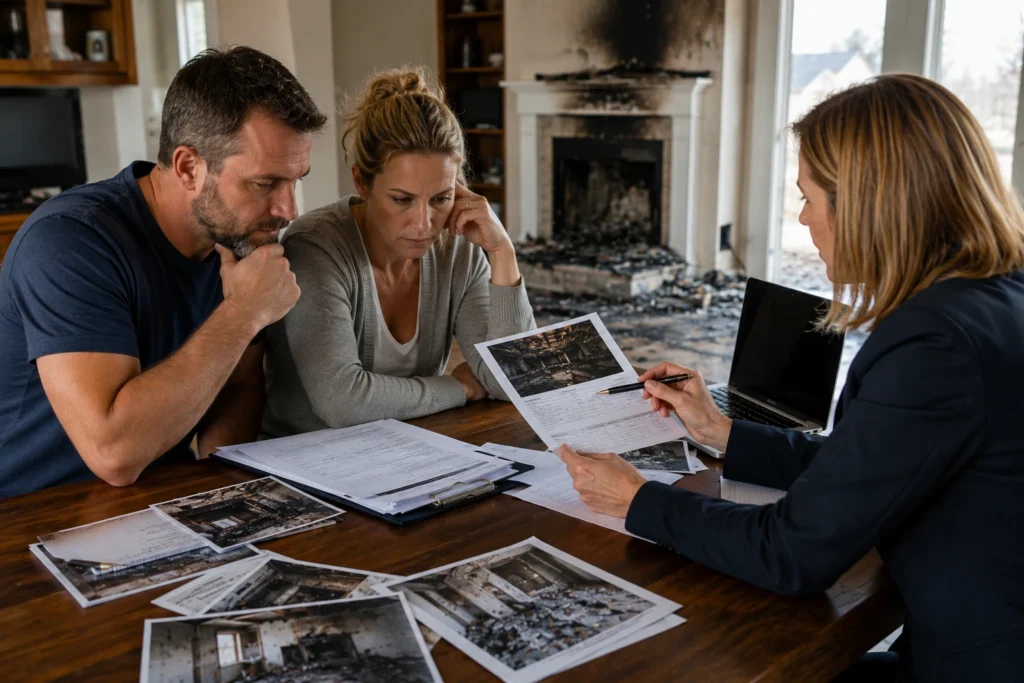
While structural repairs often receive the most attention, personal belongings can represent an equally significant portion of a fire insurance claim. Unfortunately, they are also one of the most commonly undervalued categories. After a fire, homeowners are typically asked to prepare an inventory listing everything that was damaged or destroyed. That sounds simple. It rarely is. Trying to remember every possession accumulated over many years is an enormous task. Entire closets, kitchen cabinets, storage rooms, garages, and home offices must be reconstructed from memory.
Items commonly overlooked include:
- Small kitchen appliances
- Holiday decorations
- Hand tools
- Sporting equipment
- Children’s toys
- Books
- Linens
- Cleaning supplies
- Bathroom accessories
- Pet supplies
- Gardening equipment
- Office supplies
Individually, these items may seem inexpensive. Collectively, they often represent thousands of dollars.
Documentation Makes a Difference
The stronger your documentation, the easier it becomes to support the value of your personal property claim.
Helpful documentation includes:
- Purchase receipts
- Credit card statements
- Warranty registrations
- Owner’s manuals
- Family photographs
- Home videos
- Online purchase histories
- Bank statements
- Product serial numbers
Even if receipts are unavailable, photographs taken before the fire often reveal furniture, electronics, artwork, and other belongings that might otherwise be forgotten. The following table illustrates how personal property valuations can differ depending on the approach used.
| Personal Property | Common Initial Insurance Valuation | More Accurate Replacement Consideration |
| Living room furniture | Depreciated value | Current retail replacement cost |
| Electronics | Older model pricing | Comparable new technology |
| Clothing | General allowance | Individual replacement value |
| Kitchen items | Bulk estimate | Cost to replace complete sets |
| Professional tools | Partial valuation | Equivalent replacement equipment |
| Home office equipment | Minimal estimate | Current market pricing |
Creating a detailed inventory requires time and patience, but it often has one of the greatest impacts on the overall value of a fire insurance claim. Homeowners who carefully document every damaged item are far less likely to leave money on the table than those who rely solely on memory or accept broad estimates without reviewing them carefully.
Mistakes Homeowners Make That Hurt Their Fire Claim
Even when homeowners have legitimate insurance claims, certain decisions can unintentionally reduce the amount they recover. These mistakes are understandable. Most people will never experience a major fire, so they simply do not know what to expect. Fortunately, many of these issues can be avoided with preparation and careful documentation.
Throwing Away Damaged Property Too Soon
After a fire, it’s natural to want to begin cleaning immediately. Burned furniture, smoke-damaged clothing, and ruined household items can feel like painful reminders of the disaster.
Resist the urge to throw everything away. Whenever possible, keep damaged items until your insurance company has inspected them or specifically authorizes disposal. If something must be removed for safety reasons, photograph it from multiple angles before discarding it. Those photographs may become valuable evidence later if questions arise about the extent of the damage.
Accepting the First Settlement Offer
Many homeowners feel enormous financial pressure after a fire. Temporary housing. Restaurant meals. Replacement clothing. Emergency purchases. It all adds up quickly. Because of this, an early settlement offer can seem appealing. However, the first estimate is not always the final estimate. Hidden smoke contamination, structural issues, water damage, or code upgrades often become apparent only after repairs begin. Before accepting payment, compare the insurance estimate with contractor bids and ask questions about anything that appears to be missing.
Not Reading the Insurance Policy
Insurance policies are lengthy documents, but understanding the basics can prevent costly misunderstandings.
Review important sections such as:
- Dwelling coverage
- Personal property coverage
- Additional Living Expenses (ALE)
- Deductibles
- Replacement Cost versus Actual Cash Value
- Ordinance or Law Coverage
- Coverage limits
- Exclusions
Knowing what your policy covers allows you to recognize when legitimate expenses may have been overlooked.
Failing to Document Every Loss
Documentation is one of the strongest tools a homeowner has during a fire claim. Take photographs before cleanup begins. Record videos of every room. Keep receipts for emergency purchases. Save hotel invoices. Maintain copies of contractor estimates. The more evidence you have, the easier it becomes to support the value of your claim.
Delaying Necessary Mitigation
Most insurance policies require homeowners to take reasonable steps to prevent additional damage after a fire.
That might include:
- Boarding broken windows
- Covering damaged roofs with tarps
- Removing standing water
- Beginning structural drying
Ignoring these responsibilities could allow secondary damage to occur, which may complicate the claim.
Warning Signs Your Fire Claim Is Being Undervalued
Not every low estimate indicates a problem, but certain warning signs deserve closer attention. Consider reviewing your claim more carefully if you notice any of the following:
- The inspection lasted only a short time.
- Entire rooms appear missing from the estimate.
- Smoke cleaning is excluded despite visible contamination.
- Water damage receives little attention.
- Personal belongings have unusually low values.
- Code upgrades are omitted.
- Repair pricing seems much lower than contractor estimates.
- You feel pressured to accept a settlement quickly.
- Questions about the estimate receive vague answers.
One issue by itself may not indicate an undervalued claim. Several issues together should encourage a more thorough review before accepting payment.
How a Public Adjuster Helps Maximize Fire Claim Settlements
Handling a fire insurance claim is almost like managing a construction project while simultaneously negotiating a financial agreement. It is a lot. Public adjusters help homeowners level the playing field by representing the policyholder rather than the insurance company. Unlike company adjusters, public adjusters work on behalf of the property owner. Their goal is to identify every covered loss, prepare detailed documentation, calculate fair repair costs, and negotiate a settlement that reflects the true extent of the damage. For homeowners in Euless, having an experienced advocate can reduce confusion and provide confidence throughout the claims process.
A public adjuster may assist with:
- Reviewing the insurance policy
- Inspecting the property independently
- Preparing detailed repair estimates
- Creating comprehensive personal property inventories
- Coordinating with restoration contractors
- Working with engineers and specialists
- Negotiating directly with the insurance company
- Filing supplemental claims if additional damage is discovered
Their experience often helps uncover costs that may have been overlooked during the initial inspection.
Tips to Protect Yourself During a Fire Insurance Claim
The actions you take immediately after a fire can have a lasting impact on your insurance settlement. Start by documenting everything before cleanup begins. Take wide-angle photographs of every room. Then capture close-up images of damaged materials and personal belongings. Create video walkthroughs whenever possible. Videos often capture details that still photographs may miss.
Keep every receipt related to the fire, including:
- Hotel stays
- Restaurant meals
- Temporary rental housing
- Laundry services
- Emergency clothing
- Boarding materials
- Tarps
- Cleaning supplies
- Storage units
Many of these expenses may qualify for reimbursement under Additional Living Expenses coverage. Maintaining a claim journal is another valuable habit.
Record:
| Information to Track | Why It Matters |
| Phone calls | Documents conversations |
| Emails | Confirms agreements |
| Inspection dates | Creates a timeline |
| Contractor visits | Supports repair estimates |
| Expense receipts | Verifies reimbursement requests |
| Claim updates | Tracks overall progress |
Good organization makes negotiations significantly easier if disagreements arise later. In complex insurance disputes, documentation becomes even more valuable because every estimate, receipt, inspection report, and photograph contributes to the overall evaluation of the loss. Maintaining organized records creates a clear chain of evidence, much like the concept of provenance, which describes the documented history or origin of an object or record.
When Should You Contact a Public Adjuster?
Not every fire claim requires professional representation. However, certain situations often justify obtaining independent assistance.
Consider speaking with a public adjuster if:
- Your home suffered major structural damage.
- The insurance estimate appears significantly lower than contractor bids.
- Your claim involves substantial smoke contamination.
- Valuable personal property was destroyed.
- Reconstruction costs continue increasing.
- The claim has stalled without explanation.
- Additional damage is discovered after demolition.
- The insurance company denies portions of the claim.
Seeking professional guidance does not necessarily mean the insurance company acted improperly. It simply ensures your claim receives an independent review before important decisions are made. If you’ve been researching Fire Insurance Adjuster How to Maximize Your Claim, one lesson becomes clear: thorough documentation, accurate estimating, and experienced negotiation often have the greatest impact on the final settlement.
Real-World Examples of How Fire Claims Become Undervalued
Understanding common claim issues is helpful, but real-world scenarios illustrate why careful documentation matters.
Example One: Hidden Smoke Damage
A fire begins in the kitchen and is quickly extinguished. At first, the insurance estimate includes replacing cabinets, drywall, flooring, and several appliances. Later, restoration specialists discover smoke contamination inside the HVAC system, attic insulation, bedrooms, and closets. Additional deodorization, duct cleaning, and insulation replacement become necessary. The final repair costs increase substantially because the initial inspection focused primarily on visible fire damage.
Example Two: An Incomplete Personal Property Inventory
Following a house fire, the homeowner lists only major furniture and electronics. Weeks later, family photographs reveal dozens of overlooked possessions including artwork, power tools, kitchen appliances, sports equipment, decorative items, and home office supplies. Individually, these items seem minor. Together, they represent thousands of dollars in additional covered property.
Example Three: Structural Damage Hidden Behind Walls
After demolition begins, contractors discover charred framing, weakened roof trusses, and damaged electrical wiring concealed behind drywall. None of these repairs appeared in the original estimate because they were impossible to observe during the initial walkthrough. This is why supplemental claims are sometimes necessary as additional damage becomes visible during reconstruction.
How to Dispute a Low Fire Insurance Settlement
Receiving a settlement offer that seems too low can be discouraging, especially after everything you’ve already been through. The important thing to remember is that the first offer is not always the final offer. Insurance claims are often revised as new information becomes available, additional damage is uncovered, or supporting documentation is submitted. The key is to approach the situation methodically.
Carefully Review the Insurance Estimate
Begin by reading every page of the adjuster’s estimate. Compare it with what you actually see at the property.
Ask yourself questions like:
- Is every damaged room included?
- Are smoke, soot, water, and heat damage all addressed?
- Does the estimate include demolition and debris removal?
- Are permits and inspections included?
- Have all damaged personal belongings been listed?
- Does the pricing reflect current construction costs in your area?
Small omissions may seem insignificant, but together they can dramatically reduce the overall settlement.
Obtain Independent Repair Estimates
One estimate should never be your only source of information. Licensed restoration contractors, general contractors, engineers, and specialty cleaning companies often identify repairs that were not included during the initial insurance inspection. Comparing multiple professional estimates helps you understand whether the insurer’s valuation accurately reflects the work required to restore the property. If several qualified contractors consistently identify missing repairs, you have stronger evidence to support requesting a supplemental review.
Continue Documenting the Property
The claims process does not stop after the first inspection. In fact, additional damage frequently becomes visible once demolition begins.
Examples include:
- Burned framing behind drywall
- Hidden smoke contamination
- Damaged insulation
- Water trapped beneath flooring
- Electrical wiring requiring replacement
- Mold developing in concealed spaces
Take photographs throughout the rebuilding process and keep copies of every contractor report. Updated documentation strengthens supplemental claims and helps explain why repair costs may increase.
Communicate in Writing Whenever Possible
Phone conversations are helpful, but written communication creates a permanent record. Whenever questions arise about coverage or repair estimates, follow up with an email summarizing what was discussed. Written records can help prevent misunderstandings and provide valuable documentation if disagreements develop later.
Why Thorough Documentation Wins Claims
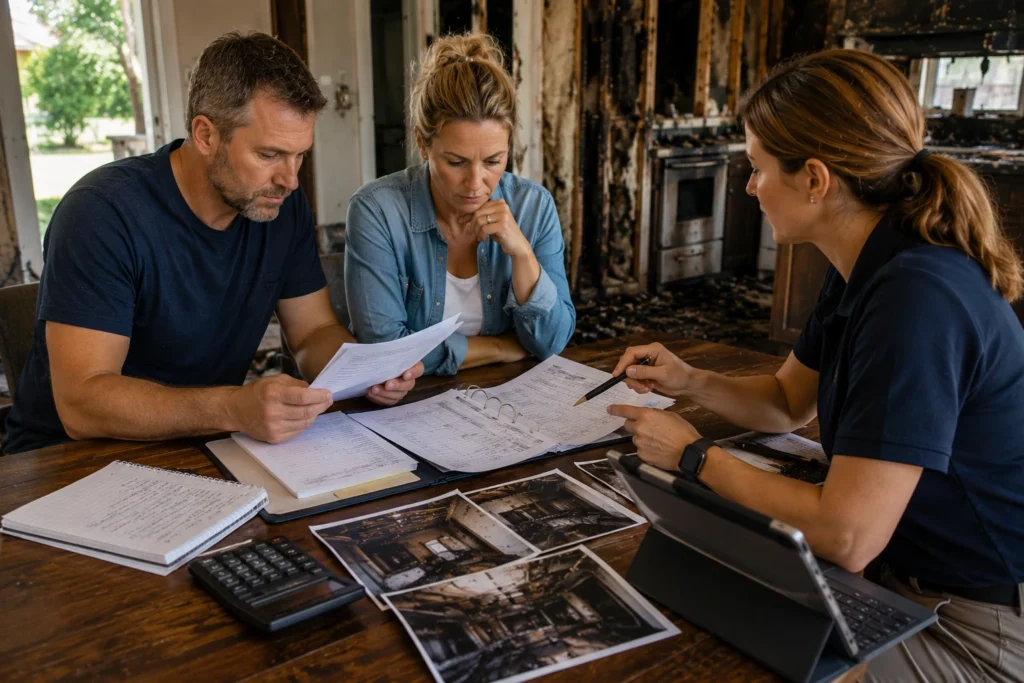
If there is one lesson that consistently separates strong insurance claims from weak ones, it is documentation. Insurance companies rely on evidence when evaluating losses. The more organized and complete your records are, the easier it becomes to demonstrate the true value of your damages.
Excellent claim documentation often includes:
- Photographs before cleanup begins
- Video walkthroughs of the property
- Fire department reports
- Contractor repair estimates
- Engineering evaluations
- Smoke remediation reports
- Hotel invoices
- Temporary housing agreements
- Restaurant receipts
- Emergency purchase receipts
- Personal property inventories
- Warranty information
- Bank and credit card statements
- Copies of all emails and letters
Many homeowners also create digital folders where every claim-related document is stored in chronological order. This simple habit saves time and makes responding to requests for additional information much easier. Organization can become one of your greatest advantages during negotiations.
Final Thoughts
Recovering after a fire is about far more than repairing a building. It is about restoring your home, protecting your financial future, and rebuilding your sense of normalcy. Understanding How Insurance Companies Undervalue Fire Claims gives homeowners the knowledge they need to approach the claims process with greater confidence and realistic expectations. As you’ve seen throughout this guide, undervalued claims often result from incomplete inspections, underestimated repair costs, overlooked smoke and water damage, excessive depreciation, or missing building code upgrades. None of these issues are impossible to address, but they do require careful attention, thorough documentation, and a willingness to review every estimate before accepting a settlement.
Remember that your insurance policy is a contract designed to provide financial protection after a covered loss. Taking the time to understand your coverage, maintain organized records, obtain independent estimates when appropriate, and ask informed questions can significantly improve the outcome of your claim. For homeowners and business owners in Euless, recovering from a fire can feel overwhelming, but you do not have to navigate the insurance process alone. Whether you choose to work with restoration professionals, contractors, engineers, or a licensed public adjuster, having experienced guidance can make the process more manageable and help ensure that no legitimate damage is overlooked. A fair settlement is about more than receiving a check. It is about having the resources necessary to restore your property safely, replace what was lost, and move forward with confidence. By staying informed and taking an active role throughout the claims process, you’ll be in the strongest possible position to secure the recovery your insurance policy is intended to provide.
FAQs
Insurance companies may overlook hidden damage, use conservative repair estimates, or apply depreciation that lowers the overall settlement value.
Yes. You can request a review, submit additional evidence, obtain independent estimates, or work with a public adjuster to negotiate.
In many cases, yes. Standard homeowners insurance policies often cover smoke damage resulting from a covered fire, subject to policy terms.
Hidden smoke contamination, water damage from firefighting, structural weakening, HVAC contamination, and code upgrades are frequently underestimated.
Not necessarily. Review the estimate carefully to ensure all damages and repair costs are included before accepting a settlement.
Use photos, receipts, bank statements, warranty documents, and home videos to support your inventory and replacement costs.
Consider hiring a public adjuster if your claim is large, complex, delayed, or you believe the insurance company has undervalued your losses.
Yes. Smoke can travel through vents, walls, and open spaces, leaving residue and odors throughout the property.
Prioritize safety, notify your insurance company, document all damage with photos and videos, and take reasonable steps to prevent further damage.
The timeline varies depending on the severity of the damage and the complexity of the claim, ranging from several weeks to several months.