
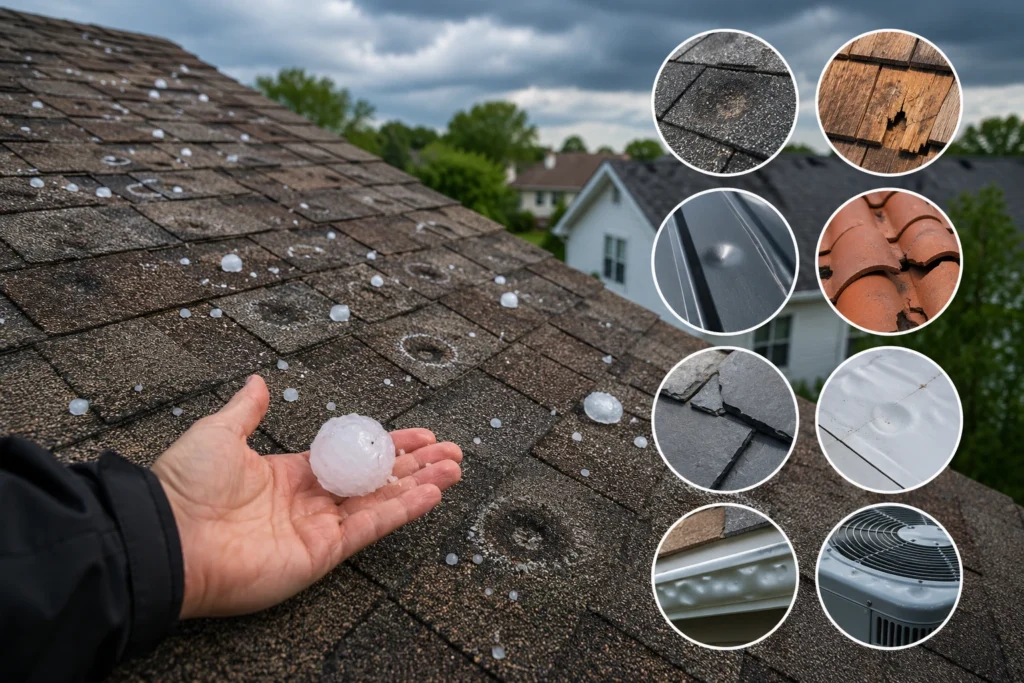
A hailstorm can disappear almost as quickly as it arrives, yet the damage it leaves behind can remain hidden for months. That’s why understanding how to identify hail damage by roof type is one of the most valuable skills a homeowner can develop. Every roofing material reacts differently when struck by hail, and knowing what to look for can help you detect problems early, minimize repair costs, and strengthen an insurance claim before minor damage turns into major structural issues. After severe weather passes, many homeowners perform a quick visual check from the driveway and assume everything is fine because no shingles appear to be missing.
Unfortunately, hail damage is rarely that obvious. Some impacts bruise roofing materials beneath the surface, while others weaken protective coatings without leaving dramatic visible signs. Learning how to identify hail damage by roof type gives property owners a better chance of spotting these hidden issues before water begins entering the home. A roof is much more than the outer layer covering a house. It is an integrated system made up of shingles or panels, flashing, underlayment, ventilation components, fasteners, gutters, and numerous other parts working together to keep moisture outside. Damage to even one component can compromise the performance of the entire system, which is why thorough inspections matter after every significant hailstorm. Understanding roofing damage also involves appreciating how construction materials react under sudden impact.
One fascinating field that studies these behaviors is Tribology, which explores friction, wear, and surface interactions between materials. While homeowners don’t need engineering degrees, understanding that different materials wear differently helps explain why every roof should be inspected according to its specific construction. For homeowners in Euless, strong thunderstorms accompanied by hail are a regular part of life. Even storms that produce relatively small hailstones can shorten the lifespan of roofing materials. Early detection allows repairs to begin before moisture infiltration creates even more expensive interior damage.
Why Roof Type Matters When Inspecting Hail Damage
Not all roofs absorb hail impacts the same way. A one-inch hailstone striking an asphalt shingle roof creates entirely different damage than that same hailstone impacting metal panels or clay tiles. Material composition, flexibility, thickness, age, and installation quality all influence how much damage actually occurs. Some roofing materials absorb impacts. Others crack. Some dent. Others slowly weaken internally without showing immediate surface damage. That variety makes roof-specific inspections essential.
Several factors determine how severe hail damage becomes:
- Diameter of the hailstones
- Wind speed during impact
- Roof pitch
- Direction of the storm
- Roofing material
- Age of the roof
- Previous repairs
- Existing weather-related wear
Even neighboring homes experiencing the exact same storm may require completely different repairs because their roofs respond differently to impact.
General Signs of Hail Damage Around the Property
Your inspection shouldn’t begin on the roof. Instead, start by examining the entire property. Surrounding damage often provides valuable clues regarding the intensity of the storm. Walk around your home carefully.
Look for evidence on:
- Gutters
- Downspouts
- Window screens
- Mailboxes
- Air conditioning units
- Outdoor furniture
- Fences
- Garage doors
- Exterior lighting
- Deck railings
If several metal surfaces display fresh dents, there is a greater likelihood your roof sustained damage as well. Next, move indoors.
Watch for subtle warning signs including:
- Ceiling stains
- Damp attic insulation
- New mold odors
- Bubbling paint
- Peeling drywall
- Wet insulation
- Unexpected drafts
Interior symptoms sometimes appear weeks after the actual storm, making routine inspections even more important. One overlooked leak can eventually affect insulation, framing, drywall, electrical systems, and flooring. The repair bill grows surprisingly fast.
Understanding Hail Size and Roof Damage
Many homeowners assume only baseball-sized hail causes roof damage. That simply isn’t true. The relationship between hail size and roof damage depends on numerous variables beyond diameter alone.
Here’s a general comparison:
| Hail Size | Typical Object Comparison | Potential Roof Impact |
| ¼ inch | Pea | Usually minimal |
| ½ inch | Marble | Light cosmetic impacts |
| ¾ inch | Penny | Possible granule loss |
| 1 inch | Quarter | Moderate roofing damage |
| 1½ inches | Ping-pong ball | Significant damage possible |
| 2 inches | Hen egg | Severe roof damage likely |
| 3 inches | Baseball | Major structural damage possible |
Wind dramatically changes impact force. A one-inch hailstone traveling at high velocity can produce more damage than a larger hailstone falling with little accompanying wind. Storm duration also matters. Repeated impacts across several minutes create cumulative stress that weakens roofing materials over time.
How to Identify Hail Damage on Asphalt Shingle Roofs
Asphalt shingles remain the most common residential roofing system across the country. They also provide some of the clearest evidence of hail damage when inspected correctly. The first thing inspectors usually examine is granule loss. Granules form the outer protective coating that shields asphalt from ultraviolet radiation and weather exposure. When hail knocks those granules away, darker asphalt becomes exposed beneath the surface. This exposed material deteriorates much faster.
Common signs include:
- Random circular impact marks
- Dark exposed asphalt
- Missing granules
- Soft bruised spots
- Cracked shingles
- Torn shingle tabs
- Loose seal strips
Not every damaged shingle requires immediate replacement. However, widespread bruising often indicates that the roof’s protective lifespan has already been shortened.
Why Bruising Matters
Bruising occurs when hail compresses the fiberglass mat beneath the asphalt coating. The surface may appear almost normal. Internally, however, structural fibers have already fractured. Those hidden fractures reduce the roof’s ability to withstand future weather events. Over time, repeated heating and cooling cycles widen the damaged area. Eventually, leaks develop.
Granule Loss Isn’t Always Obvious
Many homeowners expect large bald spots. Instead, granule loss often appears as scattered dark circles only visible during close inspection. Check gutters as well. Finding excessive amounts of fresh granules inside downspouts frequently supports evidence of recent hail impacts.
Damage Commonly Mistaken for Hail
Not every roof imperfection comes from severe weather. Misidentification creates confusion during insurance claims.
Several conditions resemble hail damage:
- Manufacturing defects
- Foot traffic
- Heat blistering
- Aging shingles
- Wind creasing
- Tree branch abrasion
- Installation errors
Experienced inspectors compare multiple impact locations. True hail damage usually creates random patterns across numerous roof slopes rather than isolated defects. Context matters. One suspicious mark rarely tells the entire story.
How to Identify Hail Damage on Architectural Shingles
Architectural shingles have become increasingly popular because they last longer and offer greater visual appeal than traditional three-tab shingles. Their thicker design also makes inspection more challenging. Large hailstones often compress multiple shingle layers without immediately producing visible cracks. Instead, inspectors search for subtle indicators.
These include:
- Slight surface dimples
- Granule displacement
- Soft depressions
- Hidden bruising
- Irregular shadowing
- Granule accumulation inside gutters
Professional inspectors frequently combine visual examination with gentle tactile inspection. Carefully feeling the roofing surface can reveal soft bruises hidden beneath intact granules. That hidden damage may eventually shorten the roof’s lifespan despite appearing relatively minor immediately after the storm.
Why Roof Age Influences Hail Damage
Roof age significantly affects how materials respond to impact. Newer shingles retain flexibility. Older shingles become brittle. That difference matters enormously.
Consider the following comparison:
| Roof Age | Typical Condition | Hail Response |
| Under 5 years | Flexible | Better impact resistance |
| 5–10 years | Moderate wear | Moderate vulnerability |
| 10–20 years | Aging | Increased cracking risk |
| Over 20 years | Brittle | Significant damage likely |
Sun exposure accelerates aging. South-facing roof slopes often experience greater ultraviolet degradation, making them more susceptible to hail damage than shaded sections of the same roof.
Cedar Shake and Wood Roof Damage
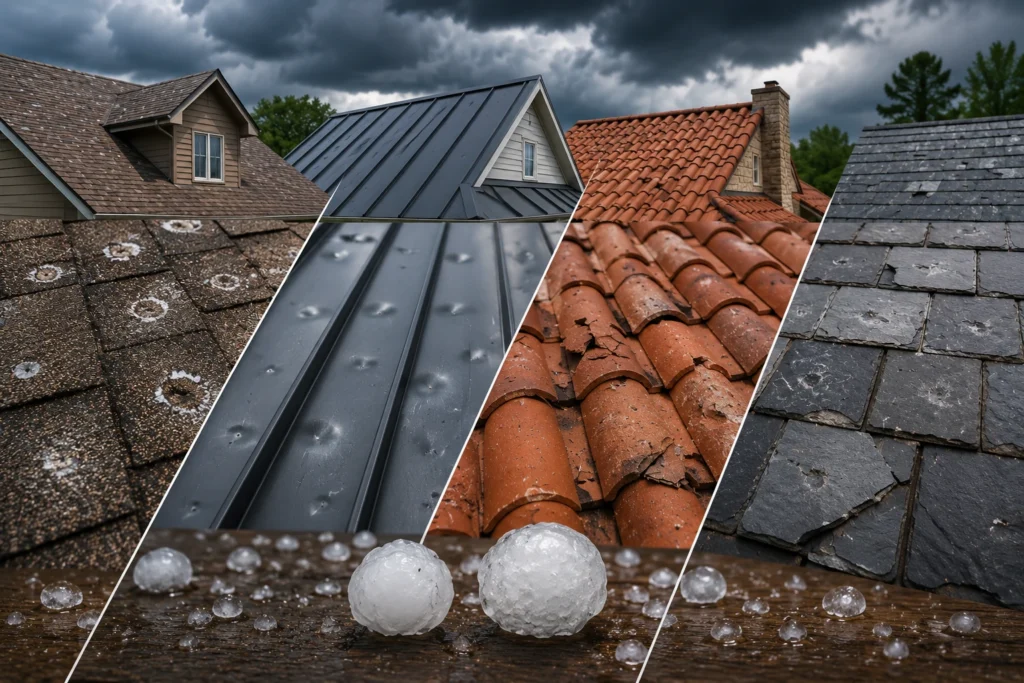
Wood roofing behaves very differently from asphalt. Instead of bruising, cedar shakes often split after hail impacts. Fresh fractures usually expose lighter-colored wood beneath the weathered exterior.
Inspectors commonly search for:
- New cracks
- Sharp edge fractures
- Impact dents
- Broken corners
- Missing wood fibers
- Loose shakes
One small crack may not appear alarming. However, wood naturally expands and contracts with changing moisture levels. Tiny fractures frequently widen over time. Moisture eventually penetrates beneath the roofing surface. That creates favorable conditions for decay.
Moisture Is the Bigger Problem
The hailstone itself isn’t always the biggest threat. Water is. Once protective wood fibers become exposed, repeated rainfall begins degrading the material. Rot, fungal growth, and insect activity may eventually follow if repairs are delayed. Routine inspections dramatically reduce these risks.
Metal Roof Hail Damage
Metal roofing offers exceptional durability. Still, it isn’t indestructible. Many homeowners assume dents automatically require roof replacement. That’s not necessarily true. Inspectors generally separate damage into two categories:
Cosmetic Damage
Examples include:
- Minor dents
- Paint scuffs
- Small dimples
- Slight surface waviness
Cosmetic issues primarily affect appearance.
Functional Damage
Problems include:
- Punctures
- Bent seams
- Loose fasteners
- Flashing separation
- Damaged coatings
- Water infiltration
Some insurance policies distinguish between cosmetic and functional damage, making proper documentation especially important.
Standing Seam Metal Roofs
Standing seam systems require special attention. Their concealed fasteners improve weather resistance, but hail can still affect seam integrity.
Inspectors carefully examine:
- Locking seams
- Panel alignment
- Fastener movement
- Flashing intersections
- Ridge connections
Even slight seam deformation may allow water intrusion under certain weather conditions. Professional inspection remains the safest approach.
Clay and Concrete Tile Roofs
Tile roofs combine beauty with longevity. They also respond to hail differently than most other roofing materials. Rather than bruising, tiles typically crack. Some fractures are immediately obvious. Others remain almost invisible until individual tiles are removed for closer examination.
Common signs include:
- Hairline cracks
- Broken corners
- Chipped edges
- Displaced tiles
- Surface fractures
Tile roofs introduce another challenge. Walking across them improperly can create more damage than the hailstorm itself. That’s why many roofing professionals rely on specialized techniques and equipment during inspections. The visible tile isn’t always the only concern.
The waterproof underlayment beneath the tiles may have sustained damage as well, even when surface cracking appears relatively minor. Continuing the inspection beyond the tile surface helps determine whether repairs are limited to a few individual tiles or involve a much larger portion of the roofing system.
How to Identify Hail Damage on Slate Roofs
Slate is one of the longest-lasting roofing materials available. A properly installed slate roof can protect a home for generations. Its impressive durability, however, doesn’t make it immune to hail. Unlike asphalt shingles that often bruise, slate usually fractures when struck with enough force. The challenge is that many of these fractures are incredibly difficult to see from the ground.
Professional inspectors carefully look for:
- Hairline cracks
- Chipped corners
- Broken edges
- Missing slate fragments
- Loosened fasteners
- Displaced tiles
Sometimes the damage is isolated to only a handful of slates. Other times, a widespread hailstorm creates dozens of tiny fractures that weaken the roof long before leaks become visible. Because replacement slate should closely match the existing roof in color, thickness, and texture, accurate documentation becomes especially important before repairs begin.
Flat Roof Hail Damage Identification
Flat roofing systems require a completely different inspection process than pitched residential roofs. Instead of shingles or tiles, these roofs rely on waterproof membranes that can bruise, stretch, or puncture after repeated hail impacts. Damage isn’t always dramatic. In fact, some of the most serious problems develop beneath the membrane where they remain hidden until water begins entering the building.
Modified Bitumen Roofs
Modified bitumen remains a common roofing choice for both residential additions and commercial buildings.
Inspectors generally search for:
- Surface indentations
- Membrane bruising
- Punctures
- Granule displacement
- Open seams
Although the roof may initially appear intact, compressed areas can eventually weaken and allow moisture penetration.
TPO Roofing Systems
Thermoplastic Polyolefin (TPO) roofing performs well in many climates, but large hailstones may still cause damage.
Common inspection findings include:
- Membrane punctures
- Surface abrasions
- Weld separation
- Flashing damage
- Pooling water around impact areas
Because seams are heat welded, inspectors pay close attention to welded joints where impacts may compromise waterproof performance.
EPDM Rubber Roofs
EPDM roofs offer flexibility that helps absorb certain impacts.
Even so, severe hail can create:
- Small tears
- Cuts
- Surface stretching
- Compression damage
- Adhesive separation
Minor defects often grow larger as seasonal expansion and contraction place additional stress on the roofing membrane.
PVC Roofing Systems
PVC roofing is highly durable, yet hail can still create functional damage.
Inspection focuses on:
- Cracked membrane surfaces
- Open seams
- Punctures
- Flashing movement
- Surface deformation
Because many flat roof issues develop slowly, annual inspections remain an excellent investment even when no active leaks are visible.
Roof Components That Frequently Sustain Hail Damage
Homeowners naturally focus on shingles, panels, or tiles. However, the surrounding roofing components deserve equal attention because they frequently sustain damage first.
Important areas include:
- Flashing
- Ridge caps
- Pipe boots
- Roof vents
- Skylights
- Chimney caps
- Gutters
- Downspouts
- Solar panels
- Satellite dishes
- Roof-mounted exhaust vents
For example, a cracked pipe boot may allow water into the attic despite every surrounding shingle remaining intact. Similarly, bent flashing around chimneys can create entry points for moisture long before ceiling stains appear indoors. Every component contributes to the overall performance of the roofing system.
Cosmetic Damage Versus Functional Damage
One of the biggest questions following a hailstorm is whether the damage is merely cosmetic or whether it affects the roof’s ability to perform. The distinction matters. Cosmetic damage changes appearance. Functional damage affects protection.
Consider the comparison below.
| Cosmetic Damage | Functional Damage |
| Small dents | Cracked roofing material |
| Paint scratches | Membrane punctures |
| Slight discoloration | Broken flashing |
| Minor dimples | Water intrusion pathways |
| Surface blemishes | Structural weakening |
While cosmetic damage may not require immediate repair, functional damage should never be ignored. Even a small opening can allow rainwater beneath the roofing system where hidden deterioration begins. When uncertainty exists, independent professional inspection provides far greater confidence than visual assumptions.
Common Mistakes Homeowners Make After a Hailstorm
Storms create stress. Unfortunately, stress often leads to rushed decisions. Avoid these common mistakes after severe hail.
Climbing Onto the Roof Too Soon
Wet roofing materials become slippery. Even experienced contractors exercise caution after storms. Personal safety should always come first.
Assuming No Leak Means No Damage
Many roofs continue shedding water for months before internal deterioration becomes visible. Hidden damage is still damage.
Waiting Too Long
Time rarely improves roofing problems. Small defects frequently become larger and more expensive. Schedule an inspection promptly after severe weather.
Ignoring Minor Exterior Damage
Small dents on gutters, mailbox posts, or HVAC units may indicate your roof experienced similar impacts. Exterior clues deserve attention.
Failing to Preserve Documentation
Throwing away damaged materials or deleting photographs may remove valuable evidence needed later during the insurance process. Good documentation protects homeowners.
How to Properly Document Hail Damage
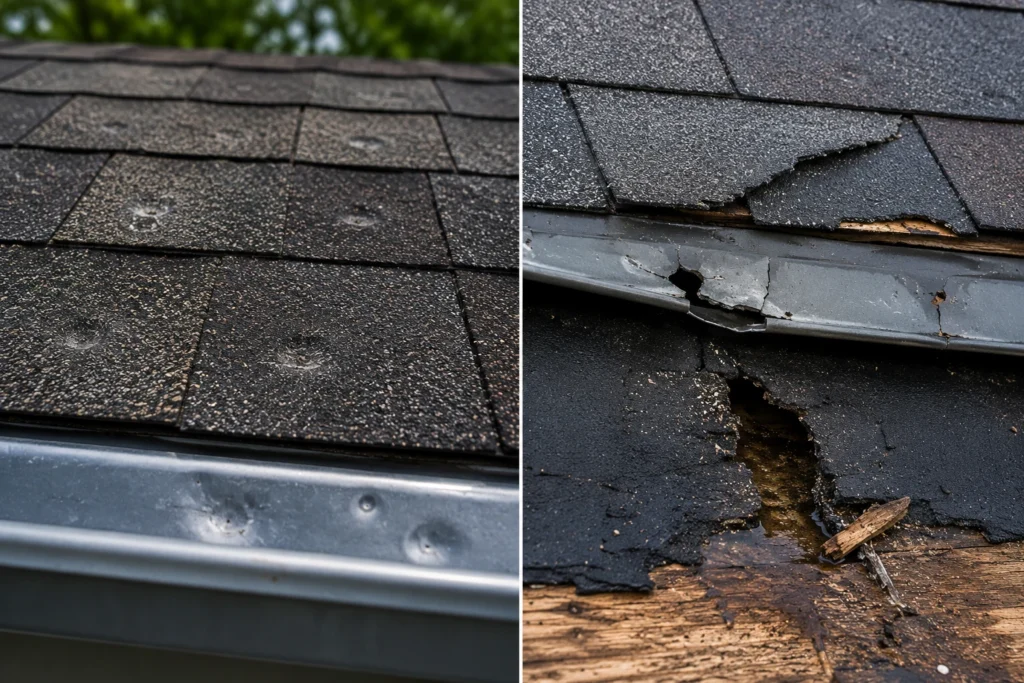
Detailed documentation often becomes one of the strongest assets during an insurance claim. Begin by taking clear photographs.
Capture:
- Entire roof slopes
- Close-up impact marks
- Damaged flashing
- Gutters
- Downspouts
- Skylights
- HVAC equipment
- Window screens
- Fence damage
- Outdoor furniture
Take photos from multiple angles whenever possible. Good lighting also helps reveal dents and bruising that may otherwise remain hidden. Next, organize supporting records.
Helpful documentation includes:
| Documentation | Why It Matters |
| Storm date | Establishes timeline |
| Weather reports | Confirms hail event |
| Inspection reports | Supports findings |
| Maintenance records | Demonstrates roof condition |
| Previous repair invoices | Shows pre-loss history |
| Contractor estimates | Assists claim evaluation |
Keep both printed and digital copies whenever possible. Organization saves valuable time later.
When Should You Schedule a Professional Roof Inspection?
Not every storm requires immediate roof replacement. Nearly every significant hailstorm, however, justifies a professional inspection.
Consider scheduling one if:
- Hail measured one inch or larger.
- Nearby homes are replacing roofs.
- Gutters show fresh dents.
- Ceiling stains suddenly appear.
- Roofing materials are more than ten years old.
- Wind accompanied the hailstorm.
- Tree branches or debris struck the roof.
Professional inspectors often identify hidden issues that homeowners simply cannot see from ground level. Early detection usually results in less expensive repairs and fewer surprises.
Repair or Replacement?
This question comes up after almost every major hail event. The answer depends on several factors rather than one simple rule.
Roof replacement may become appropriate when:
- Damage is widespread.
- Waterproof performance has been compromised.
- Manufacturer warranties are affected.
- Matching replacement materials are unavailable.
- Repair costs approach replacement value.
Repairs may be sufficient when:
- Damage is isolated.
- Roofing materials remain structurally sound.
- Waterproof integrity is preserved.
- Replacement materials closely match the existing roof.
Every situation is unique. Professional assessment provides the clearest path forward.
How Public Adjusters Help With Hail Damage Claims
Insurance policies contain detailed language that can sometimes be difficult for homeowners to interpret during a stressful claim. A public adjuster represents the policyholder rather than the insurance company.
Their responsibilities often include:
- Reviewing policy language
- Inspecting storm damage
- Preparing detailed estimates
- Organizing documentation
- Meeting with insurance representatives
- Negotiating claim settlements
An independent evaluation may identify roofing components or supporting structures that were unintentionally overlooked during an initial inspection. The objective is simple. Develop a complete and accurate understanding of the property’s storm damage. For homeowners throughout Euless, having detailed documentation and a thorough inspection can make the insurance process significantly smoother after severe hailstorms.
Preventing Future Hail Damage
No roofing material is completely immune to hail. Fortunately, several proactive measures can reduce future risk.
Consider the following maintenance practices:
- Install impact-resistant roofing materials when replacement becomes necessary.
- Schedule annual roof inspections.
- Trim tree branches that overhang the roof.
- Clean gutters regularly.
- Replace worn flashing promptly.
- Maintain proper attic ventilation.
- Repair small problems before severe weather arrives.
Preventive maintenance extends roof life while reducing the likelihood that small issues become major repairs. Consistency is one of the most valuable investments a homeowner can make.
Final Thoughts
Learning how to identify hail damage by roof type is about much more than spotting cracked shingles or obvious dents. Every roofing material responds differently to severe weather, and recognizing those unique damage patterns allows homeowners to act before hidden issues lead to expensive repairs. Whether your home has asphalt shingles, cedar shake, standing seam metal, slate, tile, or a flat roofing system, a careful inspection following a hailstorm can protect both your property and your financial investment.
Remember that damage isn’t always visible from the ground, and many functional problems begin beneath the surface where they quietly worsen over time. Taking photographs, organizing documentation, inspecting surrounding exterior components, and seeking a professional evaluation when necessary all contribute to stronger insurance claims and better long-term roof performance. Most importantly, understanding how to identify hail damage by roof type helps you make informed decisions rather than relying on guesswork. A proactive approach after every major storm can extend the life of your roof, reduce repair costs, and provide greater peace of mind. For property owners in Euless, where hail-producing storms are a recurring part of North Texas weather, staying prepared and responding quickly after severe weather remains one of the smartest ways to protect your home for years to come.
FAQs
Look for dents on gutters, downspouts, window screens, and HVAC units, as these often indicate your roof may have sustained hail damage too.
No. The extent of damage depends on hail size, wind speed, roof age, and the type of roofing material installed.
Older asphalt shingles are generally more susceptible because they become brittle over time, though any roofing material can be damaged by large hail.
Yes. Hidden bruising, cracks, or punctures can gradually allow water to penetrate the roofing system long after the storm has passed.
Not necessarily. A professional inspection can determine whether repairs are sufficient or if a full replacement is warranted.
Metal roofs are typically more impact-resistant, but severe hail can still cause dents, seam damage, or punctures that affect performance.
Take clear photos of your roof, gutters, downspouts, flashing, HVAC equipment, window screens, and any visible exterior damage before repairs begin.
It’s best to arrange an inspection as soon as it’s safe after the storm so damage can be documented before weathering or repairs alter the evidence.
Yes. Undetected damage may worsen over time, making prompt documentation and professional inspection important for supporting your claim.
Different roofing materials show impact damage differently, so understanding how to identify hail damage by roof type helps homeowners recognize problems earlier and make informed repair decisions.